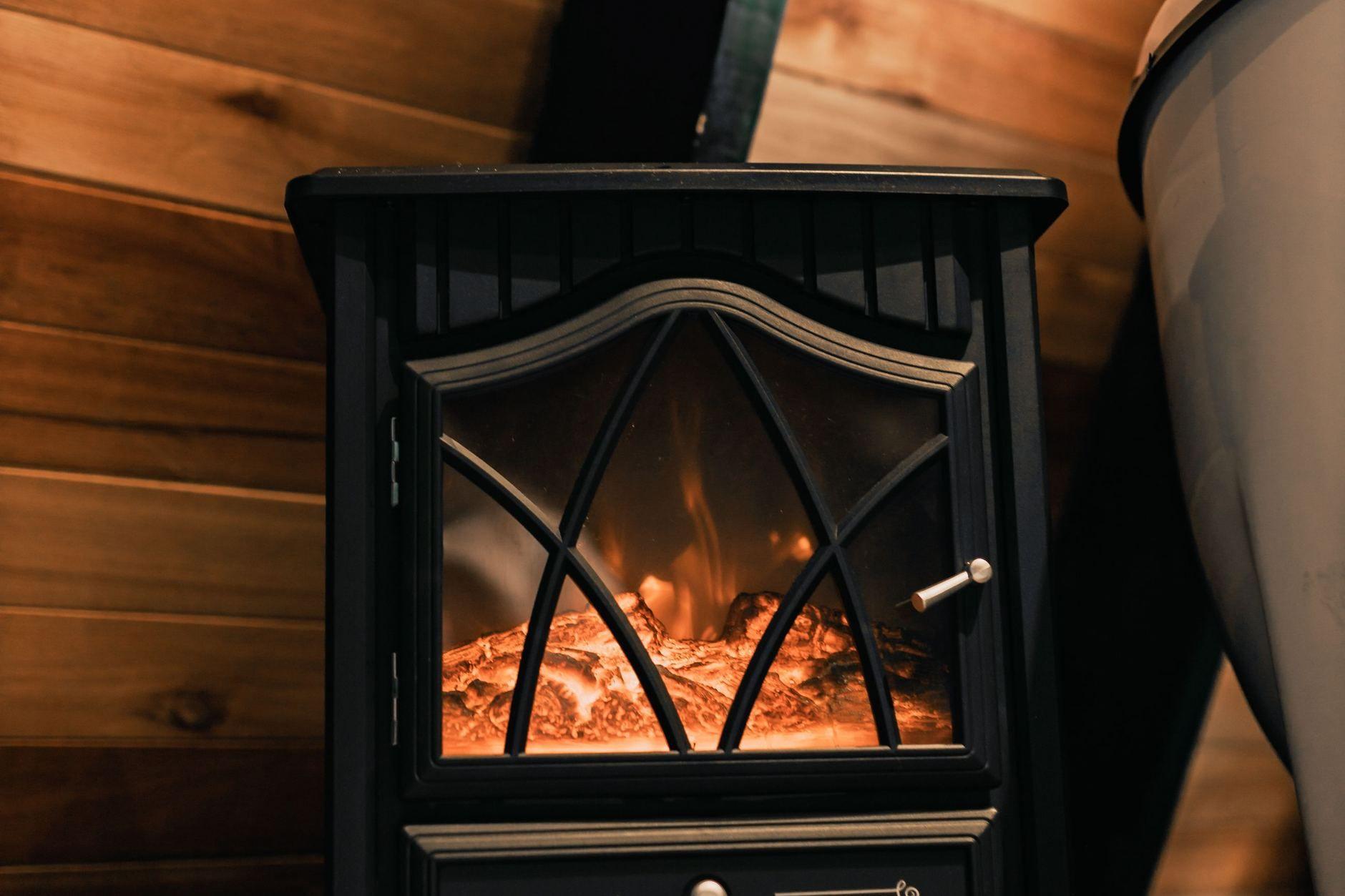
Two honest answers for an old firebox
Owners of older houses in Santa Paula usually come to us with one of two wishes. Some want the fireplace their grandparents used: real wood, the smell, the crackle, the original brick working the way it was built to. Others love how the fireplace looks but want heat on a cold January evening without hauling logs or watching half the warmth go up the flue. Both are reasonable, and both are possible in most old fireboxes. They just lead to different jobs and different bills.
This post sets the two side by side, from the point of view of the house. Brophy Chimney Pros does both kinds of work, so we have no reason to push one.
What keeping it original involves
An open wood fireplace from the 1910s to the 1940s was built for a different idea of safety. Many have no liner or a thin one, a smoke chamber left rough, and a cast iron damper that has warped over decades of heat. Keeping it burning wood usually means bringing those parts up to a standard they never had.
Typical work on an original fireplace:
- Firebox. Cracked or missing firebrick replaced, joints redone in refractory mortar, which stands up to heat that ordinary mortar cannot.
- Smoke chamber. The rough stepped brick above the damper smoothed with a heat-rated coating, so soot has less to cling to and the draft improves.
- Damper. An old cast iron plate freed, repaired or replaced, or a sealing damper fitted at the top of the flue instead.
- Flue. If the camera shows cracked or missing tile, a liner. Wood smoke needs a sound flue all the way up.
- Top. A cap and a sound crown, because rain inside an unlined flue eats mortar from within.
Fireplace repair on an older house has no list price here; the firebox, the chamber and the flue vary too much. The figure comes after we have looked, and it is written line by line.
What a gas insert involves
An insert is a sealed steel box, glass on the face, set inside the old firebox. Running on natural gas or propane, it puts most of its heat into the room, and vents through new pipe that runs up the old flue to the top. The masonry around it stays as it is, so the face brick, mantel and hearth keep the look of the house.
On an older house the details are what take the time:
- Gas supply. Many old fireplaces have no gas line, or have a log lighter pipe too small for an insert.
- Opening shape. Arched openings on Spanish revival fireplaces and shallow Craftsman fireboxes limit which units fit. We measure before anyone chooses a model.
- Venting. The new pipe needs a clear path up the old flue. Offsets and narrow tile in pre-war chimneys sometimes need work first.
- Surround. The insert's trim covers part of the face. On a tiled Craftsman surround, we pick a unit whose trim leaves the tile showing.
The installed price for an insert in a masonry opening on this site is $2,800 to $5,600, depending on the unit, the venting and the gas run.
Costs side by side
| Path or step | Price |
|---|---|
| Gas insert, fitted and vented | $2,800 to $5,600 |
| Camera run of the old flue first | $390 |
| Soot removal before either job | from $420 |
| Repairs to keep wood burning | written figure after a look |
| Rain and spark cap for the top | quoted after we measure the flue |
Whichever way you lean, a camera inspection first is money well spent on an old chimney. It tells us whether the wood path needs a liner and whether the gas path has a clear run for its pipe. To get started, describe the fireplace and which path you are leaning towards, and we call back to set a visit.
How owners in older houses decide
The choice usually comes down to how the fireplace gets used.
Choose the original if you light a fire a few times a winter, for the evening rather than for heat, and the chimney is sound or close to it. A restored wood fireplace keeps the house as it was built, and for some buyers of older Santa Paula homes that matters.
Choose an insert if you want heat on most cold nights, you do not want to store wood, or the chimney would need major masonry work to burn wood safely. An insert often sidesteps the deepest repairs because its own pipe does the venting.
Think twice about either if the stack above the roof is loose. Neither path fixes structure. Brick has to be made sound first, and our post on brick repair costs for older chimneys covers that.
Resale and the older-house buyer
People shopping for a 1920s bungalow or a Spanish revival house often want the original features, and a working wood fireplace is one of them. Others see an old open hearth and think of soot, drafts and a camera inspection waiting in escrow. There is no single right answer for resale. What helps either way is a record: a restored original with a recent camera report reads as cared for, and an insert with its install paperwork reads as sorted. The worst case for a sale is a fireplace nobody has looked at in years, whichever kind it is. Our post on buying an older home with a fireplace shows what the other side of the sale looks for.
What does not change
A gas insert does not make the chimney maintenance-free. The crown, the cap and the flashing still face every rainy season. The gas unit needs a yearly look at its burner, pilot and glass. And the original fireplace, if you keep it, wants a sweep and a look each year it is used.
Talk it through
We work on fireplaces in older homes in Santa Paula, Fillmore, Ventura and Port Hueneme. If you are weighing the two paths, the contact page is the place to start; tell us how you use the fireplace now and how you would like to use it.
An Older Chimney of Your Own?
Brophy looks before it prices, keeps sound original masonry, and writes up every repair with photos first. We work from Santa Paula and reach Fillmore, Ventura, Port Hueneme and the towns around them.