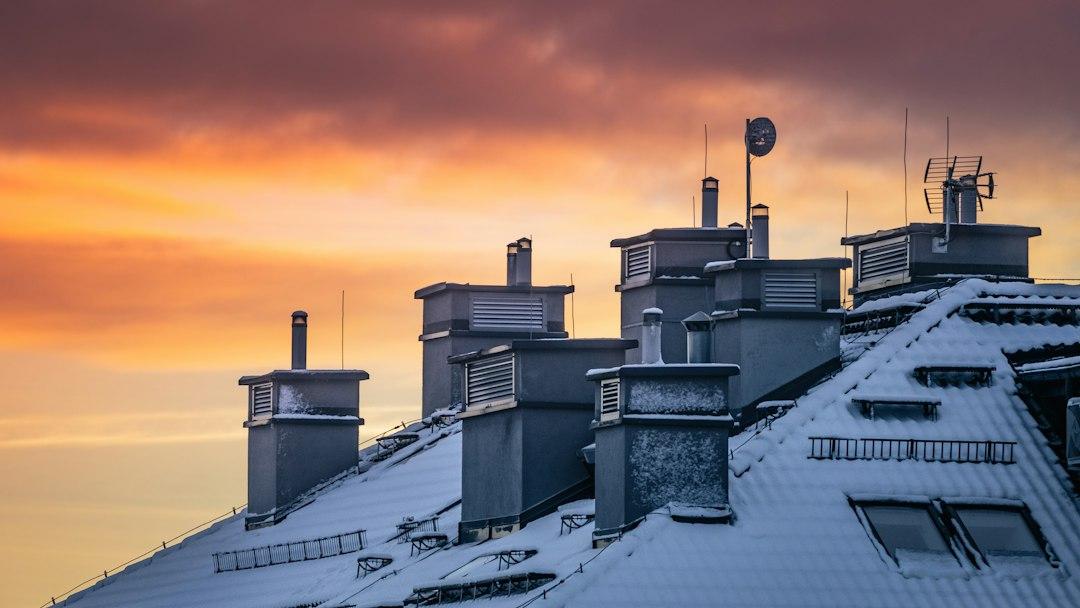
Standing is not the same as unharmed
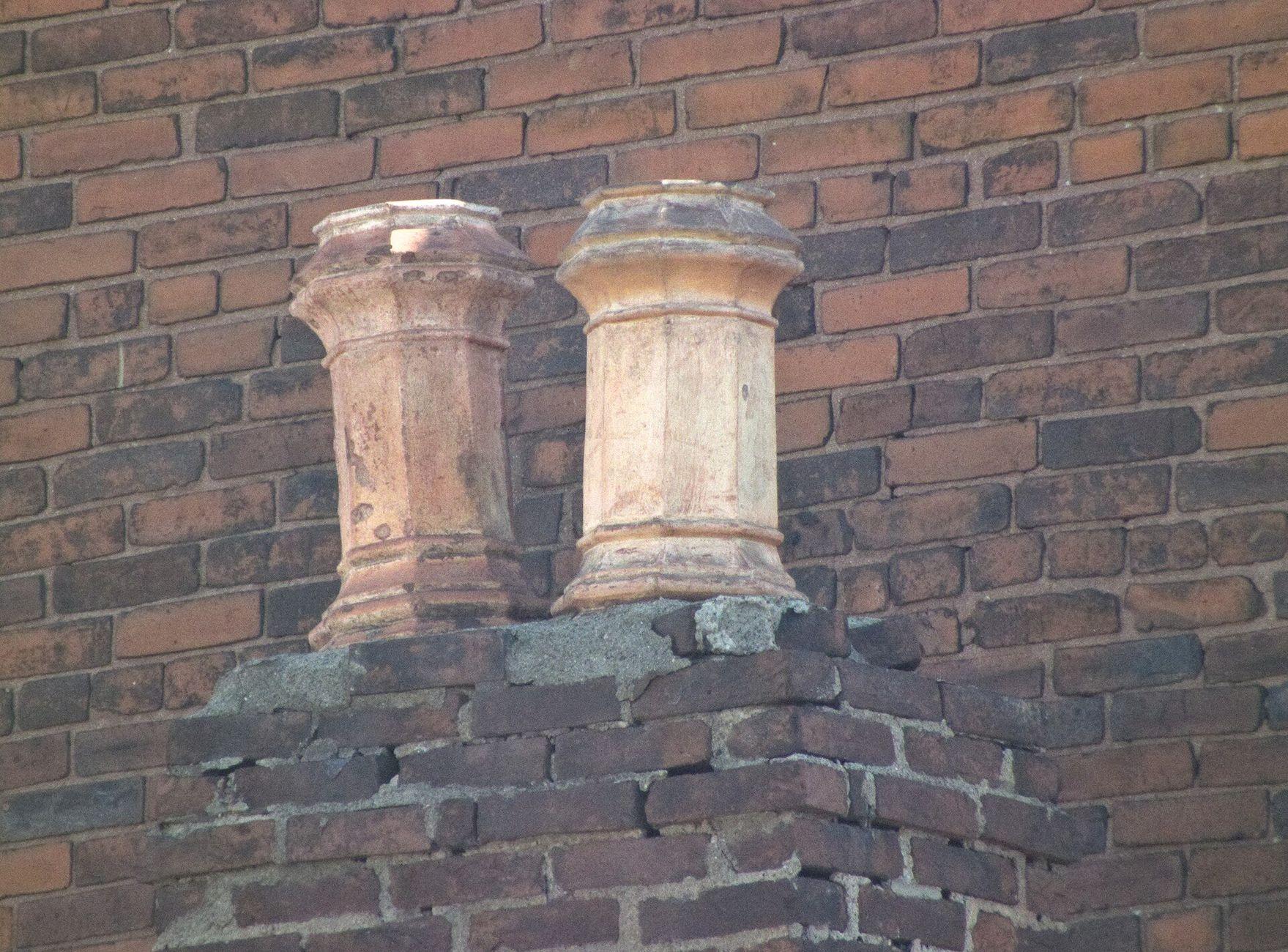
Many brick chimneys on older houses in Santa Paula and Fillmore have already ridden out at least one big shake. The 1994 quake was felt hard across Ventura County, and plenty of chimneys that stayed upright came out of it with cracks at the roofline, joints opened inside the attic, or a slight lean nobody measured at the time. Thirty winters of rain have worked on those cracks since.
So when an owner asks about bracing, the first answer is that bracing is the second step. The first is knowing what state the brick is in now.
Why the top of the stack is the weak point
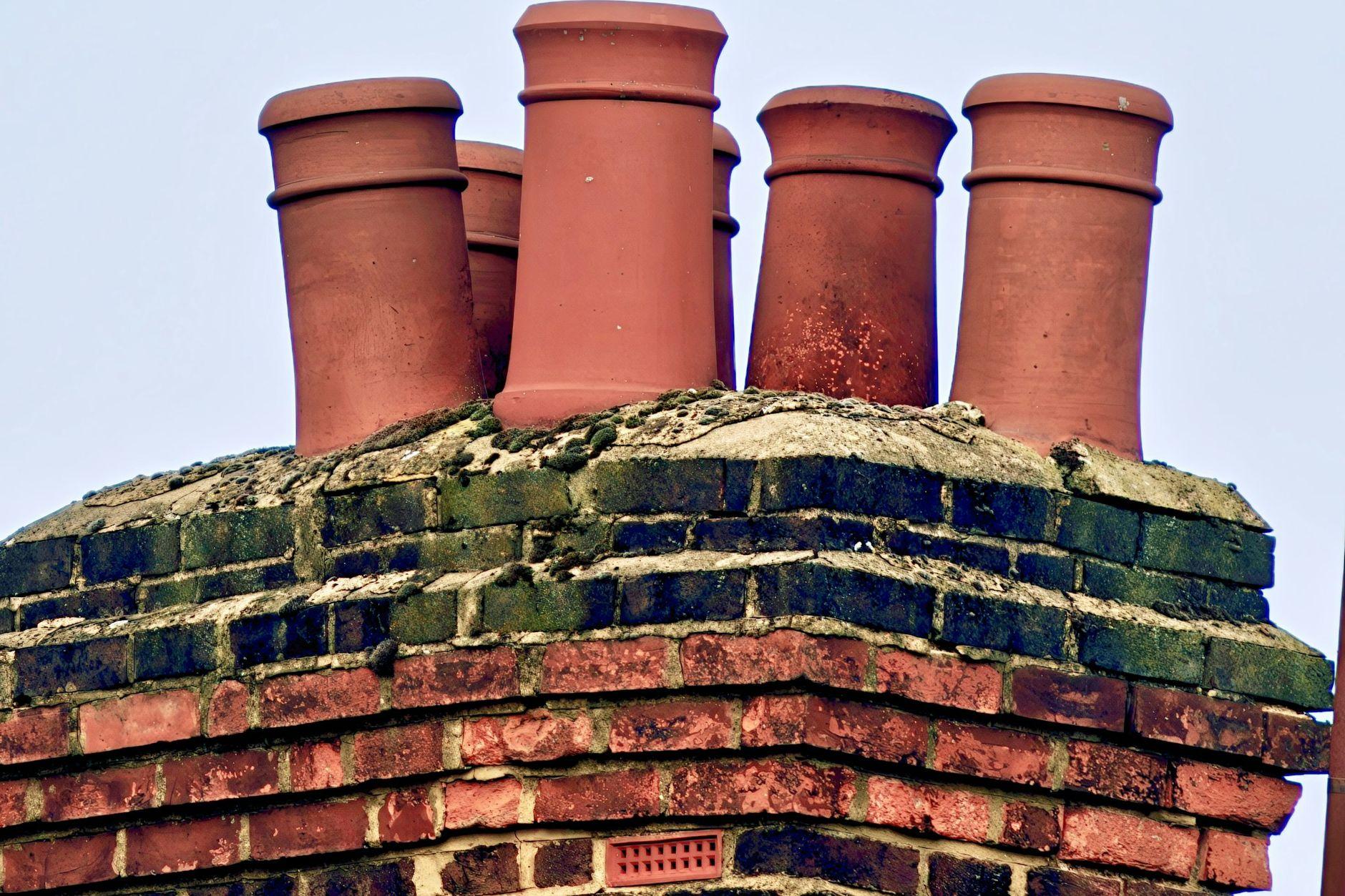
Inside the house, the chimney passes through floors, ceiling and roof framing, and those hold it roughly in line with the walls. Above the roof, nothing holds it. When the ground moves, the free top swings, and the mortar joint where it leaves the roof takes most of the strain. Pre-war chimneys were mostly laid with no steel in them and in lime mortar that softens with time, which is why so many broke at that same line in past quakes. Exterior chimneys on the side walls of Craftsman bungalows add a second weak spot: the gap between the brick and the wall, which can open as the house and chimney pull apart.
Brick first, then bracing
Bracing only helps brick that still holds together. If the top courses lift out by hand, the joints are washed out, or the crown is broken through, steel bolted to that brick just holds a loose stack in a tidier position. The usual order is:
- A camera inspection and a roof and attic look, so we know what we are bracing.
- Masonry repair or a top rebuild where the brick needs it.
- Bracing or ties chosen to suit the repaired chimney.
- Crown, cap and flashing finished last, so nothing new is disturbed.
Our post on brick repair costs for older chimneys explains how the masonry step is scoped.
The general options
Every chimney is different, and the right mix depends on its height, its position on the house and the framing around it. In general terms the choices are these.
Bracing above the roof. Angled steel members are fixed to the upper stack and anchored back into the roof framing below the sheathing. The free top now has something holding it in two directions. This suits tall stacks whose brick is still sound.
Ties at the framing. Metal bands go around the chimney where it passes a floor or ceiling line and are anchored into joists or rafters. On exterior chimneys this also holds the stack against the wall. It suits chimneys with a gap opening at the wall, or where the attic gives good access.
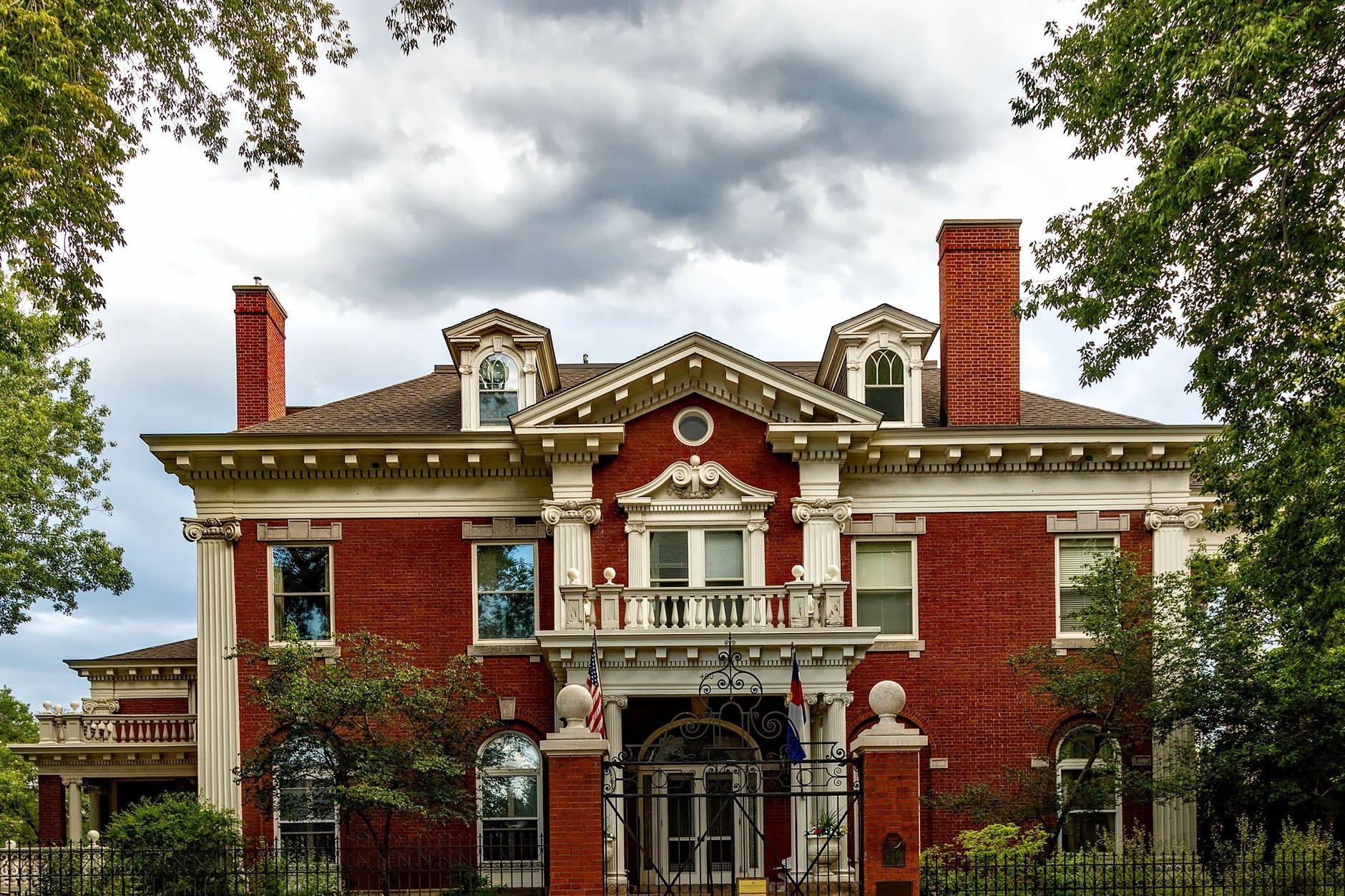
A lighter top. The masonry comes down to around the roofline and the part above is rebuilt as a framed chase with a metal flue, or laid back up in brick with steel in the new courses. Removing weight from the top is the most direct way to reduce what can fall. On a house where the chimney is part of the street view, rebuilding in matching brick keeps the look.
Each option is described in the written scope with what it involves on your house. We do not cite code sections or promise any rebate or grant; if a program applies to your house, that is for you to confirm with whoever runs it.
What older houses add to the job
- Clay tile roofs. Spanish revival roofs need tiles lifted and reset where anchors go through.
- Low attics. Many bungalows have tight attics, which makes framing ties slower to fit.
- Exterior chimneys. A gap at the wall may need masonry work at the base before ties go on.
- Two flues in one stack. A furnace flue beside the fireplace flue has to stay usable during the work.
How it is priced
Seismic work has no list price, because the brick, the height and the framing set the size of the job. You get a written scope with its figure once the inspection is done. The visit and most jobs that travel with it do have prices. The cap is quoted after we measure.
| Step | Price |
|---|---|
| Camera inspection of the full flue | $390 |
| Water diverter behind a wide stack | $450 to $1,010 |
| Diverter plus replaced step and counter flashing | $675 to $1,650 |
| Rain and spark cap after the work | quoted after we measure |
To get a scope for your chimney, describe the house, the chimney and anything you have noticed since the last quake, and we call back to arrange the inspection.
Questions owners ask us
Will bracing stop the chimney from cracking in the next quake? No one can promise that. Bracing and a lighter top reduce how much can come loose and fall, which is the real aim.
Can we keep using the fireplace? Yes, in almost every case. The flue stays in service and the bracing sits outside it or in the attic.
Should we do this before or after reroofing? Ideally at the same time, or just before. Anchors and flashing go through the roof, and a new roof is the worst thing to cut into.
Is a chimney that has never cracked safe to leave alone? It may be. The camera and a look at the roofline answer that better than its age does.
After the work
You receive photos of the brick before and after, the bracing or ties as fitted, and the scope you approved. If you later sell the house, that record answers the buyer's inspector before the question is asked. Our post on buying an older home with a fireplace covers what buyers look for.
Next step
We work on brick chimneys in Santa Paula, Fillmore, Ventura and Port Hueneme. If yours has never been looked at since the 1994 quake, the contact page is the place to change that.
An Older Chimney of Your Own?
Brophy looks before it prices, keeps sound original masonry, and writes up every repair with photos first. We work from Santa Paula and reach Fillmore, Ventura, Port Hueneme and the towns around them.